










The Beautiful, Messy Art of Setting Boundaries
Lorem ipsum dolor sit amet, consectetur adipiscing elit. Integer nec odio. Praesent libero. Sed cursus ante dapibus diam. Sed nisi. Nulla quis sem at nibh elementum imperdiet.
Let's talk about boundaries. It's a word we hear everywhere these days — tossed around in podcasts, splashed across Instagram graphics, and casually dropped into conversations over coffee.
Lorem ipsum dolor sit amet, consectetur adipiscing elit. Integer nec odio. Praesent libero. Sed cursus ante dapibus diam. Sed nisi. Nulla quis sem at nibh elementum imperdiet.
Let's talk about boundaries.
Let's talk about boundaries. It's a word we hear everywhere these days — tossed around in podcasts, splashed across Instagram graphics, and casually dropped into conversations over coffee.
It sounds so simple, doesn't it? Just draw a line in the sand, say no, and protect your peace. But if you're anything like me, you know the reality is far more complicated.
Setting boundaries is an art form, and it's often a messy one. Some boundaries are surprisingly easy to set. Saying no to a social event when you're utterly exhausted? Done. Declining an extra project when your plate is already overflowing? Handled. But then there are the other boundaries — the ones that feel like navigating a minefield blindfolded.
These are the boundaries we have to set with the people closest to us, the people we rely on, and the strangers who suddenly feel entitled to a piece of our minds.
If you are at a large party and the thought of spending
minutes doing the rounds to say goodbye to everyone makes you want to cry, just leave.
Text the host the next morning to say what a wonderful time you had. Trust me, at a big
party, no one will notice, and your peace of mind is worth it.
Lorum ipsum
Lorem ipsum dolor sit amet, consectetur adipiscing elit. Integer nec odio. Praesent libero. Sed cursus ante dapibus diam. Sed nisi. Nulla quis sem at nibh elementum imperdiet.
How Do You Know When Your Boundaries Are Blurry?
Before we even talk about how to set boundaries, we have to talk about how to recognise when we need them. Because often, we don't realise our boundaries have been crossed until we are already running on empty.
If you are constantly feeling burned out, that is a boundary issue. If you feel a knot of resentment in your stomach every time a certain person texts you, that is a boundary issue. If you find yourself snapping at your partner because you spent all day people-pleasing at work, or if you feel a lingering sense of unhappiness that you just can't shake — these are all flashing warning signs.
Resentment and exhaustion are your body's way of telling you that you are giving away too much of yourself. You are pouring from an empty cup, and it is time to plug the leak.
If you are at a large party and the thought of spending
minutes doing the rounds to say goodbye to everyone makes you want to cry, just leave.
Text the host the next morning to say what a wonderful time you had. Trust me, at a big
party, no one will notice, and your peace of mind is worth it.
Lorum ipsum
Lorem ipsum dolor sit amet, consectetur adipiscing elit. Integer nec odio. Praesent libero. Sed cursus ante dapibus diam. Sed nisi. Nulla quis sem at nibh elementum imperdiet.
The Close-to-Home Boundaries
Let's start with the hardest ones: family. Family dynamics are woven with decades of history, unspoken expectations, and deep-rooted love. Setting a boundary with a parent, a sibling, or a child can feel like a betrayal. You might worry about hurting their feelings or disrupting the delicate ecosystem of family gatherings.
But here's the truth I've had to learn the hard way: setting a boundary with family isn't about building a wall to keep them out. It's about building a gate so you can invite them in on your terms. It's saying, "I love you, but I cannot engage in this conversation right now," or "I need this weekend just for myself." It's uncomfortable, yes — but it's also an act of profound self-respect.
Then there are the professional boundaries — the ones we navigate with colleagues and employees. This can be incredibly tricky because, as women, we are often conditioned to be the nurturers, the fixers, the ones who make sure everyone else is okay. We want to be seen as team players, approachable leaders, and supportive coworkers. But where does empathy end and emotional exhaustion begin?
When you work closely with colleagues, it's easy for the lines to blur. A quick work question turns into a weekend text; a collaborative project turns into you carrying the mental load for someone else. Setting a boundary here might mean saying, "I'd love to help, but I don't have the capacity right now," or simply not replying to a non-urgent message on a Sunday morning. It can feel terrifying — what if they think I'm difficult? What if I'm no longer the 'nice' one? But being respected is far more sustainable than being a people-pleaser.
And if you have employees or a team you care about, the guilt can be even heavier. You want to be a compassionate leader, but you cannot be a / therapist or a constant safety net. Setting boundaries with your team means being clear about your availability, your expectations, and your own need to unplug. It's realising that you can be a warm, inspiring boss while still protecting your personal time. You are allowed to close your laptop. You are allowed to say, "Let's tackle this on Monday." In fact, by doing so, you give them permission to protect their own time, too.
If you are at a large party and the thought of spending
minutes doing the rounds to say goodbye to everyone makes you want to cry, just leave.
Text the host the next morning to say what a wonderful time you had. Trust me, at a big
party, no one will notice, and your peace of mind is worth it.
Lorum ipsum
Lorem ipsum dolor sit amet, consectetur adipiscing elit. Integer nec odio. Praesent libero. Sed cursus ante dapibus diam. Sed nisi. Nulla quis sem at nibh elementum imperdiet.


The Wild West of Social Media
And then, there is the digital world. Social media is a beautiful place for connection, inspiration, and community — it's how we found each other, after all! But it can also be a breeding ground for boundary-crossing.
For some reason, the glow of a screen makes people feel invincible. We've all seen them: the keyboard heroes who use social media as a dumping ground for their unfiltered thoughts, criticisms, and unsolicited advice. When you put yourself out there — whether you have a hundred followers or a hundred thousand — it can feel like you're standing in a public square with no armour.
So, how do we protect our energy in a space that is designed to consume it? How do we set boundaries online without losing the joy of connection?
If you are at a large party and the thought of spending
minutes doing the rounds to say goodbye to everyone makes you want to cry, just leave.
Text the host the next morning to say what a wonderful time you had. Trust me, at a big
party, no one will notice, and your peace of mind is worth it.
Lorum ipsum
Lorem ipsum dolor sit amet, consectetur adipiscing elit. Integer nec odio. Praesent libero. Sed cursus ante dapibus diam. Sed nisi. Nulla quis sem at nibh elementum imperdiet.
Tips & Tricks for Your Digital Boundaries
1. Remember That You Don't Owe Anyone an Explanation
If someone leaves a rude or invasive comment, your first instinct might be to defend yourself or explain your choices. Don't. You do not owe a stranger on the internet a justification for how you live your life, what you wear, or what you believe. Silence is a complete sentence.
2. The Block and Mute Buttons Are Your Best Friends
There is no shame in curating your digital space. If an account consistently makes you feel bad, annoyed, or drained — mute them. If someone crosses a line in your comments or DMs — block them. Think of your social media feed as your living room. You wouldn't let someone walk into your house and start insulting your décor, would you? Show them the door.
3. Set "Office Hours" for Your Apps Social media is designed to be addictive.
It's easy to fall down a scrolling rabbit hole at PM when you should be sleeping. Set specific times of the day when you engage with your apps, and outside of those hours, turn off notifications. Your brain needs time to rest without the constant ping of other people's opinions.
4. Share the Bloom, Protect the Roots
You can be authentic and vulnerable online without sharing every single detail of your life. Decide what parts of your world are for public consumption and what parts are sacred — just for you. You get to choose what blooms in the sunlight and what stays safely underground.
5. Don't Feed the Trolls Keyboard heroes thrive on engagement.
When you argue back, you're giving them exactly what they want: your energy. Instead of engaging in a digital tug-of-war, take a deep breath, step away from the screen, and redirect that energy toward something that actually fills your cup.
If you are at a large party and the thought of spending
minutes doing the rounds to say goodbye to everyone makes you want to cry, just leave.
Text the host the next morning to say what a wonderful time you had. Trust me, at a big
party, no one will notice, and your peace of mind is worth it.
Lorum ipsum
Lorem ipsum dolor sit amet, consectetur adipiscing elit. Integer nec odio. Praesent libero. Sed cursus ante dapibus diam. Sed nisi. Nulla quis sem at nibh elementum imperdiet.
A Final Thought
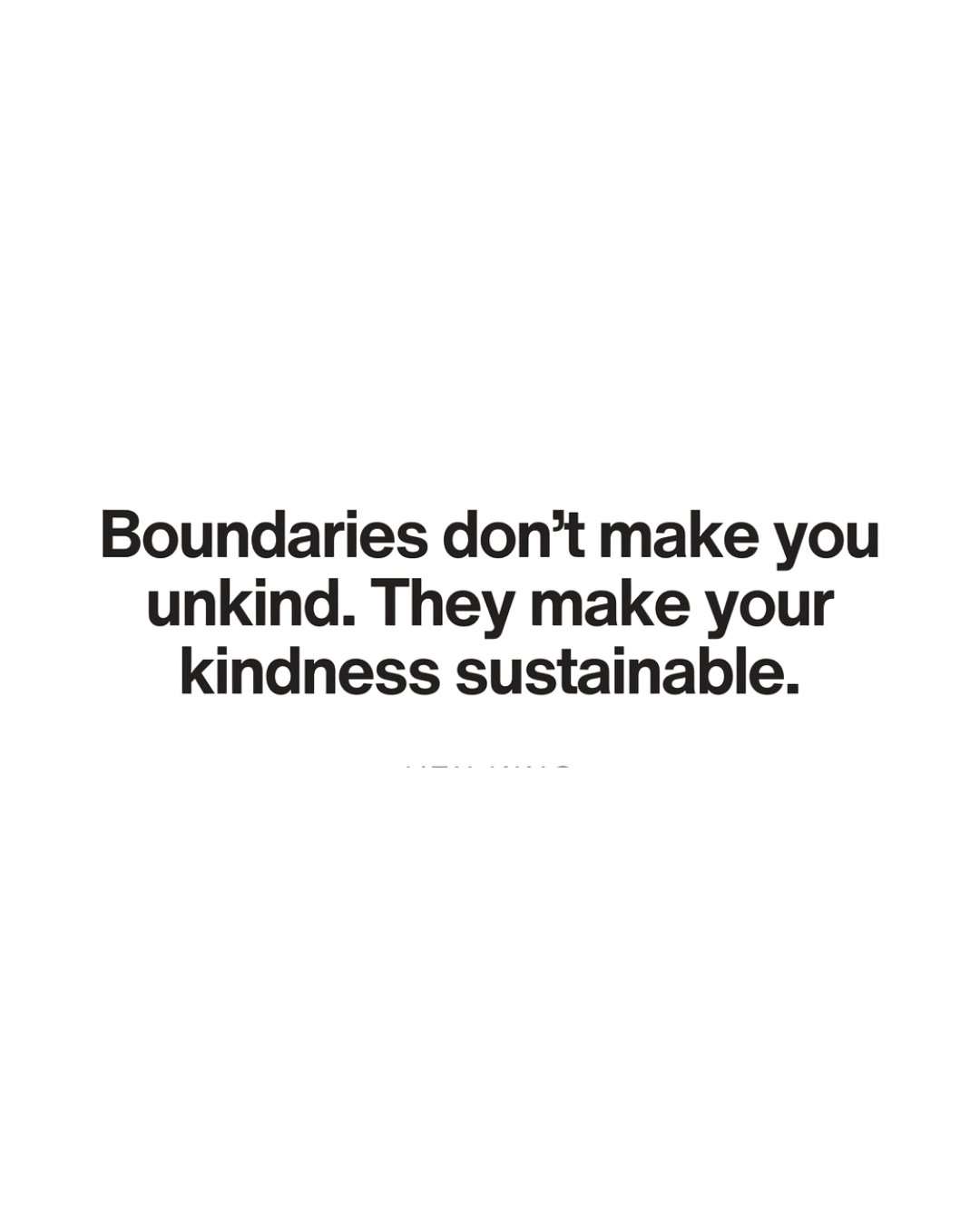
Setting boundaries — whether it's with your mother, your assistant, or a stranger on Instagram — is not a sign of coldness. It is a sign that you know your worth. It is a declaration that your time, your energy, and your heart are valuable resources, and you are the one who decides how they are spent.
It will feel messy. You will probably feel guilty the first few times you do it. But keep practising. Keep drawing those lines. Because on the other side of that temporary discomfort is a life that feels truly, unapologetically yours. Love, Dee
If you are at a large party and the thought of spending
minutes doing the rounds to say goodbye to everyone makes you want to cry, just leave.
Text the host the next morning to say what a wonderful time you had. Trust me, at a big
party, no one will notice, and your peace of mind is worth it.
Lorum ipsum
Lorem ipsum dolor sit amet, consectetur adipiscing elit. Integer nec odio. Praesent libero. Sed cursus ante dapibus diam. Sed nisi. Nulla quis sem at nibh elementum imperdiet.